
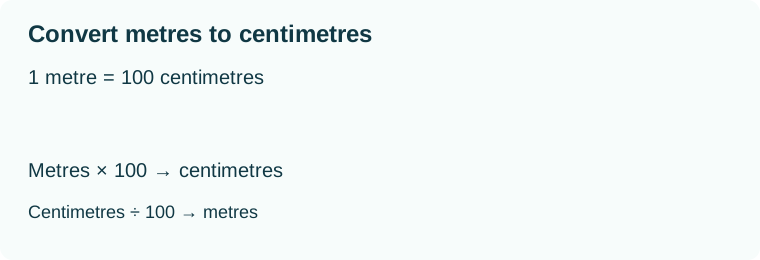
Metric prefixes make measurement scales easier to compare. Kilo means a thousand; centi means one hundredth; milli means one thousandth.
The underlying idea
Length factors must be squared for area and cubed for volume. One meter is 100 centimeters, but one cubic meter is 1,000,000 cubic centimeters.
Prefixes and dimensions
Length factors must be squared for area and cubed for volume. One meter is 100 centimeters, but one cubic meter is 1,000,000 cubic centimeters. Choose measurements that describe the same object, system, or period; changing the reference changes what the result means.
Worked example
2.5 kilometers = 2,500 meters. 250 millimeters = 0.25 meters. Moving to a smaller unit increases the numerical value.
Put the method into practice
- Write down the quantity you need to find.
- Identify the measurements and their units.
- Convert units before doing the calculation.
- Apply the formula and keep unrounded intermediate values.
- Check whether the result is reasonable for your situation.
Try the Unit Converter with your own values.
Common mistakes
Mixing units, using the wrong reference value, and rounding too early can all change the result. A calculator cannot repair inaccurate measurements. For project estimates, distinguish the calculated base quantity from allowances and supplier rounding.
What to learn next
Explore this topic’s related answers below for focused examples and alternative ways to check a result.
Sources & references
- NIST Guide to the SI: Conversion Factors — National Institute of Standards and Technology